In packaging, material selection directly influences product performance, production efficiency, transportation costs, sustainability targets, and customer perception. For manufacturers and brand owners, choosing between PET packaging and HDPE bottles is one of the most common and commercially important packaging decisions.
Both materials dominate the packaging market for good reason. They are lightweight, scalable, and versatile across industries ranging from food and beverage to healthcare, personal care, and household chemicals. But while they may appear similar in function, the differences between PET packaging and HDPE bottles can significantly impact your product’s success.
This guide explores the strengths, limitations, and ideal applications of each material to help businesses make more informed packaging decisions.
Understanding PET Packaging
PET packaging refers to packaging made from Polyethylene Terephthalate, a thermoplastic polymer widely used for bottles, jars, and food containers.
PET is known for its:
- High clarity
- Strong barrier properties
- Lightweight durability
- Excellent recyclability
Its transparent appearance and structural strength make PET packaging a preferred choice for products where visibility matters.
Read more: Why HDPE Packaging Is the Backbone of Modern Packaging Solutions
Common Applications of PET Packaging
- Bottled water
- Soft drinks
- Juices
- Cooking oils
- Personal care liquids
- Nutritional beverages
PET packaging is particularly effective in industries where product presentation influences purchasing decisions.
Understanding HDPE Bottles
HDPE bottles are made from High-Density Polyethylene, a strong thermoplastic polymer valued for durability and chemical resistance.
HDPE bottles are recognised for:
- High impact resistance
- Excellent chemical compatibility
- Strong moisture barrier properties
- Opaque or translucent design options
Unlike PET packaging, HDPE bottles are often chosen for products that require structural strength over product visibility.
Common Applications of HDPE Bottles
- Shampoo and conditioner
- Pharmaceutical tablets
- Cleaning products
- Industrial chemicals
- Milk and dairy products
HDPE bottles are especially valuable where safety and chemical stability are priorities.
PET Packaging vs HDPE Bottles: Key Differences
Understanding the differences between PET packaging and HDPE bottles is essential for selecting the right packaging solution.
1. Appearance and Product Visibility
One of the biggest distinctions between PET packaging and HDPE bottles is visual presentation.
PET Packaging
PET packaging offers crystal-clear transparency, allowing consumers to see the product inside.
This is particularly important for:
- Beverages
- Oils
- Cosmetic liquids
Transparency enhances shelf appeal and builds consumer trust.
HDPE Bottles
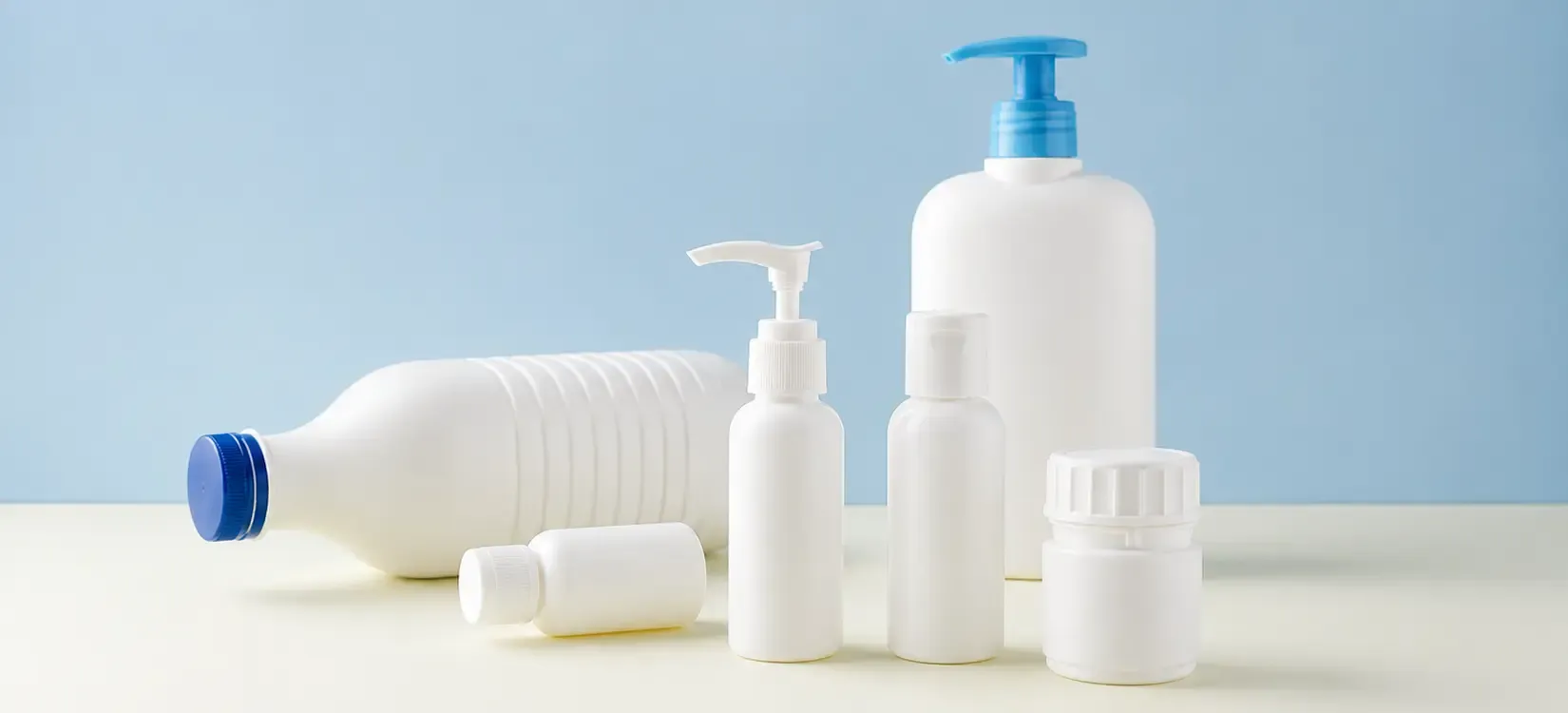
HDPE bottles are usually opaque or semi-translucent.
This makes them ideal for:
- Light-sensitive products
- Products where visual display is less important
Best choice:
If product visibility matters, PET packaging is the stronger option.
2. Strength and Durability
Both PET packaging and HDPE bottles are durable, but they perform differently under stress.
PET Packaging
PET is strong and impact-resistant but can crack under high pressure or repeated impact.
HDPE Bottles
HDPE bottles are more flexible and resistant to dents, drops, and physical stress.
This makes them ideal for:
- Industrial handling
- Chemical products
- Bulk transport
Best choice:
For rugged supply chains, HDPE bottles often perform better.
3. Chemical Resistance
Chemical compatibility is critical for many products.
PET Packaging
PET packaging works well with food, beverages, and personal care formulations but may not perform well with aggressive chemicals.
HDPE Bottles
HDPE bottles offer superior chemical resistance, making them ideal for:
- Cleaning agents
- Laboratory chemicals
- Pharmaceutical products
Best choice:
For chemical-heavy formulations, HDPE bottles are typically preferred.
4. Barrier Properties
Barrier performance affects shelf life and product quality.
PET Packaging
PET packaging provides strong oxygen and carbon dioxide barriers, making it ideal for:
- Carbonated beverages
- Juices
- Food products
HDPE Bottles
HDPE bottles offer excellent moisture resistance but lower gas barrier performance compared to PET.
Best choice:
For beverages and shelf-life-sensitive products, PET packaging is often the better fit.
5. Sustainability and Recycling
Sustainability plays a growing role in packaging decisions.
PET Packaging
PET packaging is widely recycled and often reused in bottle-to-bottle recycling systems.
PET also supports high recycled content (rPET) integration.
HDPE Bottles
HDPE bottles are also highly recyclable and widely accepted in recycling systems.
HDPE’s durability also makes it suitable for reuse systems.
Best choice:
Both perform strongly, but PET packaging often leads in closed-loop bottle recycling systems.
6. Weight and Logistics
Both materials are lightweight, but logistics performance differs.
PET Packaging
PET is lightweight and rigid, making it ideal for efficient stacking and retail presentation.
HDPE Bottles
HDPE bottles are slightly lighter and more flexible, reducing breakage risks during transportation.
Best choice:
For fragile supply chains, HDPE bottles offer better resilience.
7. Cost Efficiency
Cost impacts long-term packaging strategy.
PET Packaging
PET packaging can be cost-effective for high-volume production, particularly in beverages.
HDPE Bottles
HDPE bottles often provide lower production costs for industrial and household product applications.
However, cost depends on:
- Bottle complexity
- Volume
- Material availability
Best choice:
Both are commercially viable, but product type influences total cost.
Which Industries Prefer PET Packaging?
PET packaging is widely preferred in:
Food and Beverage
Its clarity and gas barrier performance make it ideal for liquid food products.
Personal Care
Shampoos, body washes, and skincare liquids often use PET packaging for shelf appeal.
Nutritional Products
Protein drinks and supplements benefit from PET’s transparency and strength.
Which Industries Prefer HDPE Bottles?
HDPE bottles dominate in:
Healthcare
Pharmaceutical packaging often relies on HDPE bottles for moisture protection.
Household Chemicals
Cleaning products require HDPE’s chemical resistance.
Industrial Products
Lubricants, solvents, and industrial liquids often use HDPE bottles.
How to Choose Between PET Packaging and HDPE Bottles?
Choosing the right material depends on several factors:
Choose PET Packaging If:
- Product visibility is important
- Shelf appeal drives sales
- Carbonation or oxygen barriers matter
- Premium product presentation is required
Choose HDPE Bottles If:
- Chemical resistance is critical
- Light protection is required
- Supply chain durability is a priority
- The product requires moisture protection
The decision should align with product requirements, branding goals, and operational efficiency.
How Casepak Supports Material Selection?
At Casepak, we help businesses navigate complex packaging decisions by providing tailored guidance on both PET packaging and HDPE bottles.
Our expertise includes:
- Material consultation
- Bottle design optimisation
- Production compatibility
- Sustainability planning
- Scalable packaging solutions
By understanding product requirements and market demands, we help businesses choose packaging materials that support both performance and growth.
Frequently Asked Questions (FAQs)
1. What is the difference between PET packaging and HDPE bottles?
PET packaging offers higher clarity and stronger gas barrier properties, while HDPE bottles provide better chemical resistance and durability.
2. Is PET packaging better than HDPE bottles?
It depends on the product. PET packaging is better for visibility and beverages, while HDPE bottles are better for chemicals and healthcare.
3. Are HDPE bottles recyclable?
Yes, HDPE bottles are widely recyclable and commonly used in sustainable packaging systems.
4. Is PET packaging safe for food products?
Yes, PET packaging is widely approved for food and beverage use.
5. Which is more sustainable: PET packaging or HDPE bottles?
Both are recyclable, but PET often has stronger bottle-to-bottle recycling systems, while HDPE supports durable reuse applications.