Blog Reviewed by: Mike Talbot
Christmas is an opportunity for beauty brands to introduce limited-edition collections, festive gift sets and seasonal product bundles. The right packaging can make these products feel special while protecting the formulation and supporting a convenient user experience.
With custom cosmetic packaging, brands can create distinctive seasonal designs through colours, finishes, labels and coordinated packaging components. At the same time, eco friendly cosmetic packaging approaches can help brands consider material efficiency, recyclability and reuse without compromising product functionality.
Why Is Custom Cosmetic Packaging Important for Christmas Collections?
Seasonal packaging helps brands create a consistent identity across bottles, jars, cartons and gift sets. Coordinated designs can make familiar products feel relevant to Christmas while maintaining a recognisable brand appearance.
However, customisation should extend beyond aesthetics. Packaging must remain compatible with the formulation, protect the product during storage and transportation, and provide a reliable dispensing experience.
The objective is to create packaging that balances festive presentation, functionality and commercial requirements.
7 Christmas Cosmetic Packaging Ideas for Beauty Brands
1. Custom Cosmetic Boxes with Festive Designs
Custom boxes can bring multiple beauty products together into coordinated Christmas gift sets. Brands can explore seasonal artwork, colour palettes, matte or glossy finishes and fitted inserts.
The box should be designed around the dimensions of the products to prevent unnecessary movement during transportation. Avoiding excessive layers and decorative components can also support material efficiency.
2. Eco-Friendly Cosmetic Packaging with Recyclable Materials
Brands can explore materials that are accepted by recycling systems in their target markets. PET, glass and paper-based packaging may offer recycling opportunities, depending on local infrastructure and the complete packaging design.
Labels, coatings, colours and mixed-material components can affect recyclability. Brands should therefore evaluate the finished package rather than relying on the material alone.
3. Minimalist Christmas Packaging with Premium Finishes
Festive packaging does not always require elaborate graphics. A simple colour palette, refined typography and subtle metallic detailing can create a premium seasonal appearance.
Minimalist designs can also help brands maintain consistency with their regular product range while reducing unnecessary decorative elements.
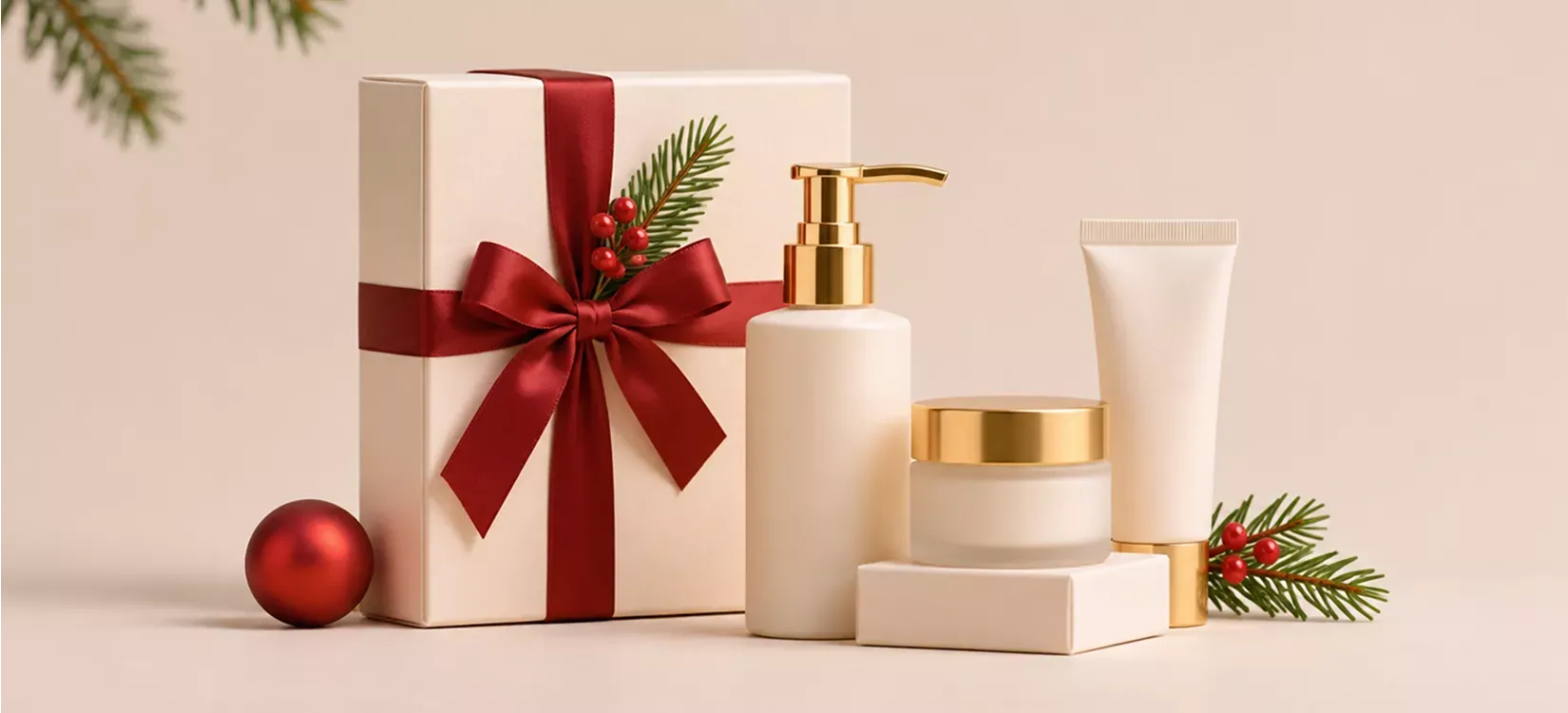
4. Christmas-Themed Skincare Gift Sets
Skincare gift sets can combine complementary products such as cleansers, moisturisers, serums and facial mists.
Coordinated bottles, jars, labels and cartons help create a cohesive collection. Brands should also consider product fit, transportation protection and whether individual cartons are necessary within the larger gift set.
5. Refillable and Reusable Cosmetic Packaging
Refillable packaging can be considered for products where the container is designed for repeated use and a practical refill system is available.
Potential applications include selected skincare and personal care products. However, brands must evaluate container durability, hygiene, formulation compatibility and refill convenience before adopting this approach.
Refillability should be supported by a functional system rather than used only as a packaging claim.
6. Premium Cosmetic Jars and Bottles with Festive Finishes
Existing bottles and jars can be given a Christmas-inspired appearance through seasonal colours, labels, surface finishes and coordinated closures.
For example, a moisturiser jar may feature a frosted finish and metallic lid, while a serum bottle may use a coordinated label and pump.
The selected materials and dispensing components must remain compatible with the formulation.
7. Sustainable Packaging with Custom Branding
Brands can combine seasonal branding with practical packaging improvements, such as right-sized cartons, reduced material usage and simpler component combinations.
Custom labels, printing and colours can support brand identity without necessarily requiring a completely new container design.
The best approach depends on the product, packaging format and available recycling or reuse systems.
What Is Eco-Friendly Cosmetic Packaging?
Eco friendly cosmetic packaging refers to packaging approaches intended to reduce environmental impact through material selection, efficient design, reuse or recycling.
Depending on the application, this may include:
- Using suitable recycled-content materials
- Reducing unnecessary packaging components
- Designing for established recycling systems
- Exploring refillable or reusable formats
- Selecting appropriate packaging sizes to reduce material waste
No single packaging material is automatically the most sustainable option.
Brands should evaluate the complete system, including the container, closure, pump, label, secondary packaging and end-of-life considerations. Environmental claims should be specific and supported by evidence.
Which Materials Are Used in Eco-Friendly Cosmetic Packaging?
Different materials offer different advantages and limitations.
| Material or Approach | Potential Advantages | Important Considerations |
|---|---|---|
| PET and other recyclable plastics | Lightweight and accepted in some recycling systems | Material grade, colour, closures and local recycling access |
| Glass | Reusable and recyclable in many markets | Weight, breakage risk and transportation |
| Recycled-content plastics | Can reduce demand for virgin material | Product compatibility, quality and traceability |
| Paper-based packaging | Suitable for cartons and printed secondary packaging | Coatings, laminations and recycling compatibility |
| Refillable packaging | May reduce replacement packaging over repeated use | Durability, hygiene and refill availability |
The right material should be selected based on formulation compatibility, performance requirements, cost and the market where the product will be sold.
Custom Cosmetic Packaging vs Eco-Friendly Cosmetic Packaging: What's the Difference?
Customisation and sustainability are not competing approaches. Brands can develop distinctive packaging while also considering its environmental performance.
| Factor | Custom Cosmetic Packaging | Eco-Friendly Cosmetic Packaging |
|---|---|---|
| Main focus | Brand identity and product presentation | Reducing environmental impact |
| Design approach | Custom shapes, colours, labels and finishes | Material efficiency, reuse and recyclability |
| Materials | Selected for design and product requirements | Evaluated for sourcing, recycled content and end-of-life |
| Key considerations | Functionality, appearance, cost and production | Environmental evidence, performance and disposal options |
For example, a brand may use an existing bottle format with custom Christmas colours and a carefully selected label rather than developing a completely new container.
This can support seasonal differentiation while allowing the brand to evaluate material use and production requirements.
How Can Beauty Brands Choose the Right Custom Cosmetic Packaging?
Selecting packaging for a Christmas collection requires both technical and commercial planning.
- Identify the product requirements: Evaluate the formulation, viscosity, sensitivity to light or air and required dispensing method. These factors determine the suitable container and closure.
- Check material compatibility: Test the formulation with the bottle, jar, pump, liner and other product-contact components. Packaging must protect the product throughout its intended lifecycle.
- Define the brand experience: Select colours, finishes, labels and packaging shapes that reflect the Christmas theme while remaining consistent with the brand identity.
- Evaluate sustainability: Consider material usage, recycled content, reuse potential and recycling compatibility. Review the complete package rather than individual components.
- Confirm production requirements: Discuss minimum order quantities, decoration methods, sample availability, production lead times and delivery schedules with the supplier.
- Test the finished packaging: Evaluate leakage, closure performance, durability, label quality and product protection before approving the final design.
What Should Brands Consider Before Ordering Christmas Cosmetic Packaging?
Christmas launches follow fixed timelines, making early packaging planning essential. Brands should finalise product specifications, artwork and quantities before requesting quotations.
A practical checklist includes:
- Confirm bottle, jar and carton dimensions.
- Finalise materials, colours, finishes and closures.
- Review packaging samples and decoration quality.
- Check that required product information remains legible.
- Confirm minimum order quantities and production timelines.
- Evaluate transportation protection and packaging compatibility.
- Review sustainability claims and end-of-life considerations.
Planning these requirements early can reduce the risk of packaging changes affecting a seasonal launch.
Why Choose CasePak for Christmas Cosmetic Packaging?
For seasonal beauty collections, brands need packaging that supports product performance, presentation and production requirements.
CasePak offers packaging options across categories including bottles, jars, pumps, sprayers and closures for cosmetic and personal care applications.
When planning a Christmas collection, brands can evaluate:
- Bottle and jar formats for different formulations
- Compatible pumps, sprayers and closures
- Suitable capacities and dimensions
- Available colours and customisation options
- Material and dispensing compatibility
- Product availability and supply requirements
Available specifications, customisation options, minimum order quantities and lead times should be confirmed for the selected products.
Planning a Christmas beauty or personal care launch? Explore CasePak's packaging range or visit CasePak to discuss suitable formats and customisation requirements.
FAQs About Christmas Cosmetic Packaging
What is custom cosmetic packaging?
Custom cosmetic packaging refers to packaging tailored to a brand's product and identity. Customisation may include container shape, size, colour, finish, printing, labels and compatible dispensing components.
What is the most eco-friendly cosmetic packaging?
There is no single best option for every product. The right choice depends on formulation protection, material sourcing, transportation, reuse potential and local recycling infrastructure.
Can cosmetic packaging be both custom and sustainable?
Yes. Brands can customise packaging while considering material efficiency, recycled content, refillability and recycling compatibility. Both requirements should be evaluated during the design process.
Which cosmetic packaging materials are recyclable?
Some PET plastics, glass and paper-based materials are recyclable in many markets. However, local acceptance varies, and labels, coatings, closures and mixed materials can affect recyclability.
How can brands customise Christmas cosmetic packaging?
Brands can use seasonal colours, festive artwork, custom labels, printing, premium finishes and coordinated gift packaging. The design should remain consistent with the brand and preserve required product information.
Is glass more sustainable than plastic for cosmetic packaging?
Not necessarily. Glass can be reused and recycled in many markets but is heavier and more vulnerable to breakage. Plastic may offer lower weight and practical handling advantages. The complete packaging system should be evaluated before making sustainability comparisons.